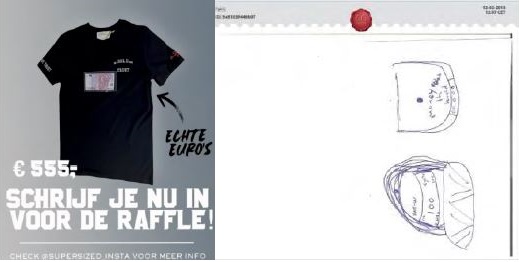
Many people think that they obtain copyright protection for an idea by putting it in writing and submitting this to an online register like CCproof. Unfortunately, that is often not the case.
An idea must have materialized for something to become 'a work'. If the work is also an intellectual creation, it may be copyrighted. An online “registration” of the idea can never be more than a piece of evidence.

The ECJ has already passed rulings on the question whether one can use the competitor's trademark as Google Adword, a number of times. Rule of thumb is: it is allowed unless the origin function of the trademark is impaired. The advertisement must clearly show if there is a relationship between the advertiser and the trademark owner or not.
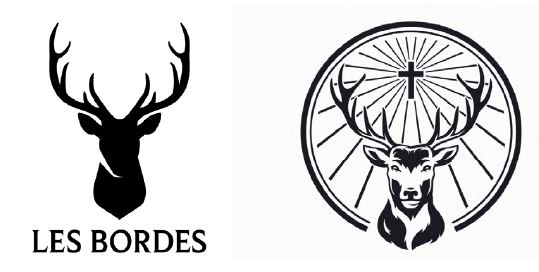
Les Bordes Golf Club uses a silhouette of the head of a Hubertus deer for their logo. When they file EU trademark protection for this sign, Mast-Jägermeister opposes, invoking its registered logo. This has been registered for a wide range of identical products and services. The EUIPO initially rules that the trademarks don’t infringe, but Jägermeister appeals successfully at the EUIPO’s Board of Appeal.
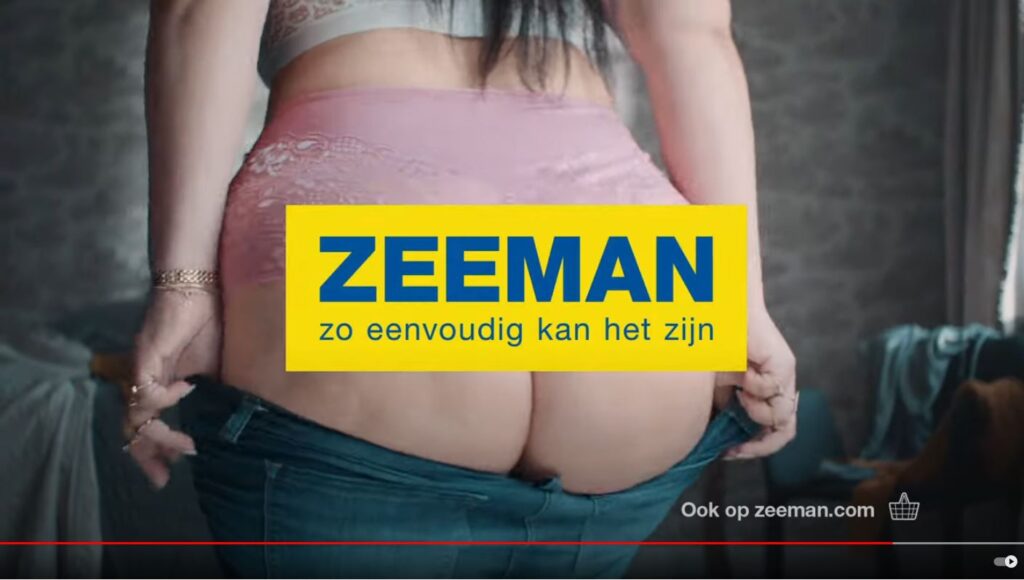
Dutch discounter Zeeman always features a segment of its offerings in their ‘it can be that simple' campaign. After socks and men's underwear, a new commercial runs on women's underwear. Different women in underwear briefly flash on the screen focusing on the buttocks, making it clear that the featured underwear is comfortable and good looking. A complaint is filed deeming the commercials’ imagery negative, tasteless, misogynist and sexist.
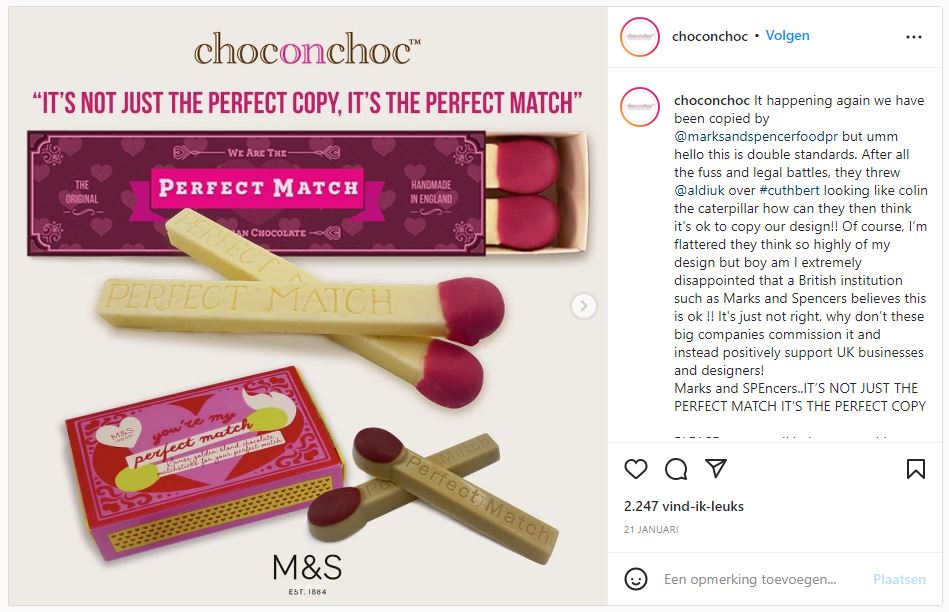
Flo Broughton starts a chocolatery named ‘Choc on Choc’ with her father back in 2003. Ever since 2015, they have been selling matches made out of white Belgian chocolate. The words ‘Perfect Match’ are pressed into the chocolate. Marks & Spencer launches an almost identical product with Valentine's Day this year, leaving Flo not amused.
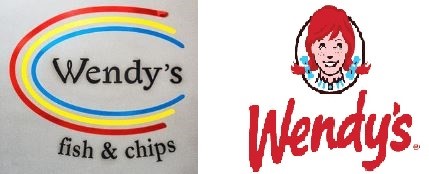
A feud dating back to 1997 has been ongoing between the American fast food chain Wendy's and a local diner in the Netherlands. The local diner trademarked their company name in 1995 for the Benelux. The American chain did previously have a trademark in the Benelux, but that had expired as a result of non-use. When the American chain files for trademark protection in 2015, the Dutch trademark holder successfully objects. For many this sounds almost incomprehensible. How can a local diner stop a multinational chain like Wendy's by simply invoking a Benelux trademark?
Call us: 071-5763116 or send an e-mail: info@abcor-ip.com
Een korte introductie tekst over de nieuwsbrief waarin je uitlegt wat het is. Hoe je direct de nieuwste editie kunt lezen en hoe je je kunt abonneren. And click here for all the numbers.
Among others in this issue:
• EUIPO vs Mora TV: weigering geluidsmerk
• Jägermeister vs Alte Heiler: stop Russische copycat
• Stichting Nederlandse Top 40: gericht op Benelux?
• Tijdschrift HART vs Hermitage: soortgelijkheid
• Monique Granneman: nieuwe partner Abcor