Fuelplaza exploits gas stations under the name OK. The company registered the logo OK in 1983 in the Benelux. On the internet the company is found at ok-olie.nl. Because ok.nl is a much better name the company approached Goas in 2007, 2013 and 2014 to buy the domain name. This was unsuccessful, and eventually a resolution was sought in court.
Fuelplaza invokes its trademark rights. Because there is not an active website, consumers would assume that the company is not active. This may affect the reputation of the company.
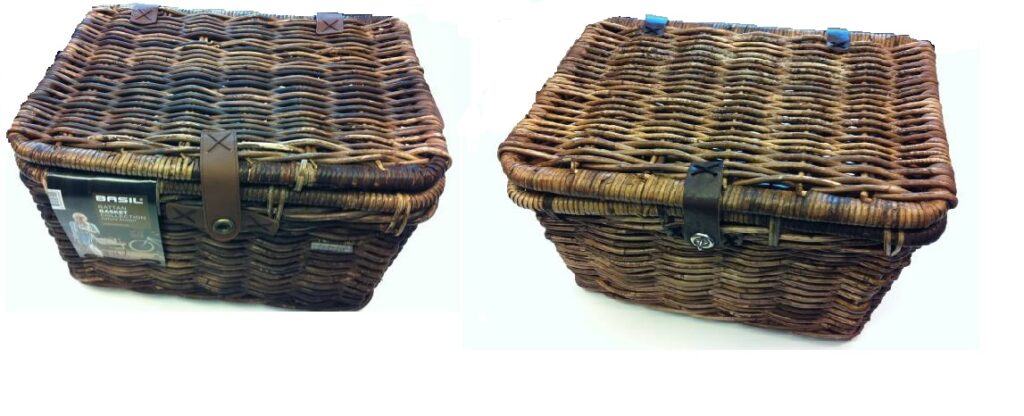
In 2011 Basil Denton unveils the new rotan bicycle basket, with leather strips. Less than a year later the competition introduces a basket that looks suspiciously alike, the Java New Looks. This likeness is not be accident. A picture of the Basil Denton product served as its inspiration. The director did not want an exact copy, claiming: “We would like to change the baskets a little bit so that they are not exactly the same as Basil”. Basil demands that the baskets are removed from the market.
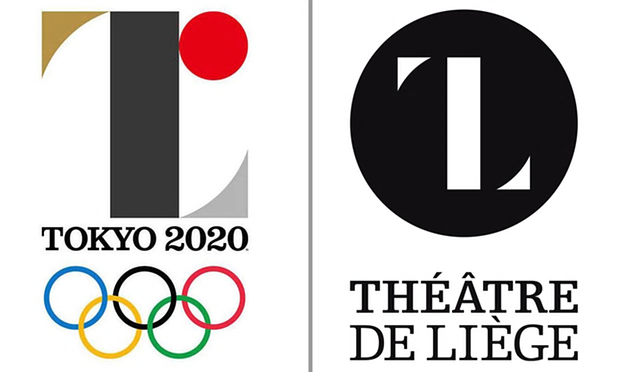
In June the new logo for the 2020 Olympic Games in Tokyo was leaked. The logo was designed by the Japanese artist Kenjiro Sano and is based on the capital T, referring to Tokyo. Aside from the bent edges the red dot is also a prominent feature, it symbolizes a beating heart and the Japanese flag. According to Belgian designer Olivier Debie the new logo has been plagiarized.

In the Benelux there are no separate rules for the registration of personal names as a trademark. Since 2012 Roy Donders has become famous, thanks to various TV shows. In 2013 a marketing agency registers the trademark ROY DONDERS for clothing in the Benelux. After this the agency contacted Roy Donders and proposed to work together. At the time Donders was busy with a marketing campaign for a supermarket. Matters quickly escalated after that.
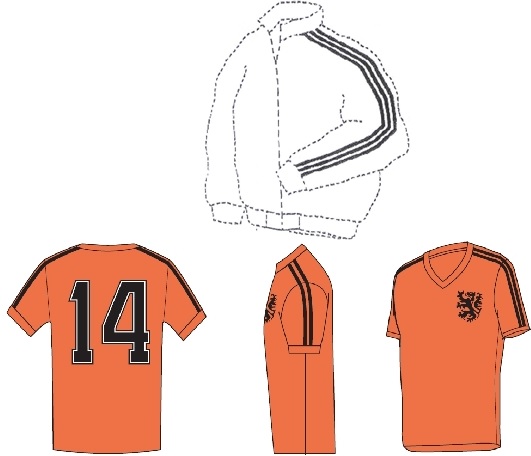
A famous trademark may oppose the use of a comparable sign for completely different products. In a trademark application is filed for an orange T-Shirt that bears number 14, which is Johan Cruyff’s (Holland’s most talented soccer player of all time). The trademark was applied for a large amount of products such as clothing, but also cups and watches. Adidas opposes this application based on her famous “three stripes” trademark, and invokes her reputation, accusing the other party of coat tail riding.

Some artists use trademarks to highlight societal problems. For the owner of the trademark in question this is often unpleasant. The trademarks is linked to nasty experiences. In case of a conflict the artist usually invokes his freedom of speech and in many cases this is enough to persuade the judge. Because of media attention many companies even choose not to act anymore at all and simply wait until the storm is over.
Call us: 071-5763116 or send an e-mail: info@abcor-ip.com
Een korte introductie tekst over de nieuwsbrief waarin je uitlegt wat het is. Hoe je direct de nieuwste editie kunt lezen en hoe je je kunt abonneren. And click here for all the numbers.
Among others in this issue:
• EUIPO vs Mora TV: weigering geluidsmerk
• Jägermeister vs Alte Heiler: stop Russische copycat
• Stichting Nederlandse Top 40: gericht op Benelux?
• Tijdschrift HART vs Hermitage: soortgelijkheid
• Monique Granneman: nieuwe partner Abcor